Soap Molds Manila 2017

Soap-Making Workshop
Soap-Making Workshop via Flickr by Steph CC BY-SA 2.0

So you have your supplies and you are know how to make soap but you can’t figure out how to get a soap mold in Manila.

Yes, I know.

You can actually use almost anything for a soap mold. People have recommended shoe boxes and plastic containers and baking molds and all sorts of stuff, but you are a perfectionist and you want to turn out the same size bar with beautiful edges every single time.

This is not possible without a standard soap mold.

So, you want a soap mold and I’m tell you what happened to me when I looked at all the possible ways to get one.

BUY

In which I try to take the easy route and buy online

The first thing I did when I decided to try to make soap on my own was to find my supplies, my tools, and my soap mold.

Hobby stores for soapmaking do not physically exist in the Philippines, so all of my options were online.

Typing in Soap Mold Manila, I found there were several hits.

One guy on OLX popped up offering a package of a 3 loaf soap mold and a cutter for about Php 4,000. Lazada offered a 1 loaf soap mold for Php 700. I decided I wanted a 3 loaf soap mold and asked him to send pictures.

The moment I saw them, I realized that it was a terrible product. The coat on the cutter was wavy and it was yellow. There had to be a better deal out there.

I decided I would have to widen my search.

I checked Brambleberry and their 3 loaf soap mold was $81.00 or Php 4,050. This was just a soap mold, although yes it had inserts but geez. Plus don’t forget shipping at Php 1,351.

This was becoming an expensive date, and I wasn’t even sure I was ready to commit yet.

So, I did the next best thing – I decided to try DIY.

The Online Buy Route 
4,050 Php Brambleberry 18 bar birchwood mold
1,351 Php Shipping
5,401 Php Total

DIY

In which I am asked to bribe a salesclerk and I try to hack it myself.

I’ll freely admit it.

This was a total failure. I am not a carpenter and I do not have tools. I didn’t even know where to buy wood supplies. So, I did what works in a first world country and what totally does not work here: I went online to look for a lumber supply business in Manila.

I came up with the following hits: Ace Builders, Wilcon Home Depot, CW, MC Home Depot and some mom and pop hardware stores and sash factories.

This is the approach that you do when you don’t know anyone (I knew someone but he was Big Business and I really didn’t want to bother him) and this is the approach that you take when you follow all the advice on the popular soapmaking blogs.

Right off the bat, I’ll tell you why this doesn’t work. The Philippines is a poor country and all the DIY supplies that you would get in America just aren’t available. The nice supply of lumber of different sizes? Not available. The nice guy who can cut it for you in store? Also not available.

I would have hired my boyfriend but he is Intellectual and does not handle power tools.

So, I called the stores. I called everyone I wrote about and others besides. I was still hoping that I could get someone to cut it for me to the length that I needed it. I was told by one that yes, they would cut it but it would be out in the back and it was Not Official. Specifically, a guy told me that he could cut it for me and that I would just have to “Take care of him.”

I was kind of in disbelief but I still took down the guy’s cell (This is what desperation drives you to).

I called Ace Builder (not Ace Hardware) and I was told that yes, they did cut it. I called all 3 branches after searching wildly for their telephone numbers because surprise, surprise, the numbers are not updated on the website and the internet Got It Wrong and the sales staff kept giving me the numbers for Ace Hardware. (For reference, the numbers are below.)

I decided this was definitely an option.

I went to Ace Hardware but quickly realized that their yes was more of a yes, kind of. Yes, they will cut it for you but you have to buy a jigsaw blade and you have to make a special request to the manager. Also, it was really expensive at almost twice the Lazada cost or about Php 1,500+/-.

One of my stops along the DIY route was to go to a small local hardware. The prices there were really reasonable, with a 1x4x8 at Php 200 and a larger plank at Php 500. But again, the Chinese owner of the shop told me that he had no one to cut it for me, so I was back to where I started.

The DIY Route
334.75 Php 1 pc 3/4″ x 4 x 8′
134.25 Php 3 hinges
29.75 Php 1 set eye and hook
140 Php 1 jigsaw blade
639 Php Total

Job it out

While I was researching the DIY route, I came across referrals to three carpenters who people assured me would do it for me.

The first one wanted to charge me Php 700 for one, while another wanted to charge Php 600 for the whole day. I still have the phone number of the third but I have decided to ask just for a referral. I’m hoping that if I get a referral, he can get it done in half a day.

It is surprisingly difficult to find a carpenter these days. So far, I have had one carpenter back out and another not answer my text.

I estimate that jobbing it out will be roughly the same as DIY so I’ve estimated the below.

The Job It Out Route
200 Php 1 pc 3/4″ x 4 x 8′
134.25 Php 3 hinges
1,351 Php 1 set hook and eye
300 Php Labor
664 Php Total

My soap mold adventure was really educational. I did think that it was going to be a tough proposition if I went the DIY or Job it out route, but I wanted to see what would happen.

The lack of materials and big box home improvement stores that can cut plywood for you really hamper building your own soap mold, and I spent a really long time going around the various shops. I went to back alleys and dodgy places, and I’m still waiting for someone to reply to some of the inquiries I sent out.

The easiest thing is simply to buy one of Lazada’s soap molds.

You won’t have to spend 2 days visiting shops or looking for carpenters, and the price difference of the Lazada soap mold and the DIY stuff is Php 50 or $1.

Php 50 or $1 isn’t a big deal, when you think you could happily be making soap.

Ever decided to try to build your own soap mold? I’d love to hear it.

 

3 of the most Influential Arts and Craft Fairs in Manila

18555949_632377273632374_2574249182590199279_n
via MaARTE’s Facebook

1. MaARTe

Want to hit the high net worth crowd?

MaARTe’s definitely the right spot.

For an exhibitor’s viewpoint, it is a solid place to showcase items as it attracts a well-heeled crowd. There is also extensive media coverage by ABS CBN, GMA, Inquirer, Philippine Star, and When in Manila.

It’s also very exclusive. The latest event only hosted 31 exhbitors at the Manila Pen. Well-known brands such as Aranaz and Phillip + Inna exhibited alongside Oscar Meija Aritsan Fragrances and Yvette’s Bags.

Your product would be in good company but be prepared.

It’s competitive, exclusive and very tough to get in.

Best fit: Craftsmen with a proven history looking to take their business to the next level.
Email: Maartefair@gmail.com
Facebook: @maartefair
No of Exhibitors: 31
When: Usually August 2017
Where: Manila Peninsula

18767603_1349955091758968_258633673884669665_n
via ArteFino’s Facebook

2. ArteFino

Although only a year old, ArteFino has the same founders as the MaARTe who have a wonderful track record and a network of heavy hitting local brands.

In line with all that expertise, the ArteFino goal is pretty lofty.

As stated by one of the founders Maritess Pineda, it is to “provide an avenue for people to discover modern applications of Philippine indigenous materials and connect with innovative artisans from different industries.”

So, you’ll see traditional cloth from the Bagobos and the T’bolis reworked to be appealing to the modern girl alongside more familiar brands like Abre Linea and K & K bespoke jewelry.

They believe that the only way for local is global and hope that the money that they raise goes into back into the Philippine communities that they come from.

It has 70 exhibitors and a wide variety of products, all housed in the 1,490 sqm 8 Rockwell penthouse.

And if you want media exposure, you’ve got it.

It was covered by the Philippine tattler, Inquirer, Spot.ph, and Town and Country. It was curated by Ito Kish, and pulls an affluent crowd.

Best fit: Products with an eye to our national traditions and the artist entrepreneur
Phone: For details contact Imelda Canuel, Secretariat, ArteFino 2017 at tel. nos. +63917-5597462 and +6399-88671838
Email: info@artefinoph.com
Facebook: ArteFinoPH 
Instagram: @artefinoph
No of Exhibitors: 70
When: Usually August 2017
Where: 8 Rockwell Penthouse

new-logo
via Manila FAME’s website

3. Manila Fame

Do you want to connect with big customers?

Manila FAME is celebrating its 66th show, and it is the biggest and most well-known of the craft fairs.

This is where big companies go to buy bulk orders. I’ve seen several large national developers send their interior design people to see what is current in the market since almost everyone in the local space is there.

Befitting all that, it’s expensive. It is Php 54,000 for 18 square meters of space and 32,850 for 9 square meters with a aluminum booth.

Still, it’s the best organized and the most thorough. It requires all participants to pass a factory inspection, and be duly registered in the Philippines with the DTI, SEC and BIR documents ready.

Best fit: Craftsmen with mature businesses who can support large orders and are looking at the international stage
Phone: +63.2.8331258, 8325033, 8312201 local 242, 240, 203, 231
Email: manilafame@citem.com.ph
No of Exhibitors: 400 approximately
When: Oct 20-22 2017
Where: World Trade Center Metro Manila and the Philippine International Trade Center Exhibit Hall

Mom’d Out | 9 ways to get your toddler to stop hitting

18190443195_459f4dc878_b
via Flickr by Ellie Nakazawa Growing Better Baby Crying Life Kids Being Kids CC BY 2.0

The first time it happened, I was surprised.

I never expected his little hand to thwack me, but that’s exactly what he did. I had told him not to do something, and he’d gotten a grumpy look on his face and decided that was No, No, No, Unacceptable and then thwack!

At this point, there were several options available to me. I could yell, hit back, do some version of time out or talk to him about it.

I decided to talk to him.

I explained to him that this was Not Good, to Calm Down and that he should be Gentle with Mommy. I thought that that was the end of it.

A few weeks later, he did it again. This time, I reacted by talking to him in a loud voice and he ended up a bit scared. When he did it a third time, I left him in the kitchen to cry it out. It got worse.

As a new mom, I was worried and stressed. Was I doing something wrong? Why was he still hitting, even if I followed all the advice I could get from teachers and older moms? This worry caused me to escalate my responses because I thought that nothing I was doing was working. I had tried all the pointers but nothing seemed to help.

I also eventually found my style. I found things that I was comfortable doing and mixed it up with other tips which I think really helped enable to help my son lessen and eventually stop hitting.

Basically, the big takeaways are really simple:

  1. Restrain him gently.
  2. Explain, explain, explain, explain.
  3. Get them to look you in the eye and pay attention
  4. Make sure they acknowledge what you say
  5. Remind them they said yes
  6. Be Calm
  7. Play pretend
  8. Find a gentle consequence
  9. Get him to say sorry and remedy the situation

1. Restrain him gently

This is really important.

Nuance is lost on little people.

I mean, they are only two and a half feet tall – most things are lost on them.

That’s pretty much why a physical action requires a physical response.

However, the type of physical response that you give is also the type of response that you want him to model. Toddlers are quick. Toddlers copy actions far more than words. If you respond violently, he’ll think it’s a good response to problem and so, if you want your baby to grow up peaceful, you’ll really need to act the same way.

Many parenting blogs and early educator say that before a child hits, restraining him gently gets the message across that he shouldn’t hit.

What happens if you aren’t able to catch him in time?

A lot of websites talk about restraining a toddler before he hits, but I’ve found that even gently holding his arms and hands after also helps.

Usually, after he hits, I’ll take his hands and arms and hold them across his chest. I might be sitting behind him so it’s almost like I am hugging him from behind. I’ll usually hold him that way for a while as I start to explain what action was bad.

I can’t stress enough how this helped me get the message across to him that hitting was bad. This combined with other things really seemed to make it easy for him to understand and internalize what I was trying to teach him.

2. Explain, explain, explain, explain

It takes a while before an explanation sticks.

This holds true if you are six feet tall or 2 feet small. After all, how many times did it take you to explain to someone how to do something for them to get your instructions? Usually takes a while, doesn’t it?

For small people, you need to multiply that a bit.

Babies are fantastic at picking up words. Your four month old may already recognize his name, and your two year old not only gets specific words but has started to understand word order and how it affects meaning.

Still, babies only really have an imperfect grasp of how language works. They’re still trying to understand where to put words and what they mean, so it’s not uncommon to find that things get lost in translation when you are explaining things.

When I’m explaining something to my son, I find that the methods below work really well:

  • Stick to simple words that you know they understand.
  • Stick to simple sentences.
  • Use a slow and even tone of voice.
  • Repeat three four or five times using the same words.

Although painstaking, this really helps him understand the why behind what mama does, and I’ve found that usually just repeating the words later helps him remember what was said.

3. Get them to look you in the eye and pay attention

This is a small simple thing that makes a world of difference.

My little man would not look at me in the eye when he didn’t want to hear what I was saying. He would tilt his head and look at the floor or his feet.

Lifting his chin gently or even just saying look at mama did two things: it let him know I was serious and it meant he knew that I knew he was listening.

He couldn’t later play on and pretend he hadn’t heard me, and it built up his respect for me as an authority figure.

4. Make sure they acknowledge what you say 

Keeping eye contact is one way of having him non-verbally acknowledge what was said but it’s important to have as many ways of getting acknowledgement as possible.

Every time I’d explain something to my little boy I had him verbally acknowledge what I said by asking him at the end, Okay?

He’d usually respond with a ‘Kay. His O would kind of get lost. 🙂

I’d ask him to acknowledge four or five times during my little lecture, and it often helped cement what was said in his memory.

5. Remind them they said yes

When he would get his bearings back, my little boy would often try to sneak in a little misbehavior. If I’d asked him to lie down, he’d ever so gently raise himself up to test my reaction.

If I look him in the eye and remind him that Remember, you said yes, it helps him abide by the agreement that we had.

Reinforcing this agreement and getting him to acknowledge it later on keeps the agreement alive. It makes it something he can reference and live by.

6. Be Calm

Being a new mama, I freaked out when my little boy hit.

It did not help.

My little boy picked up on my stress and upset and it made him even more stressed, which made him hit more.

I eventually learned not to overreact – maybe because it became so frequent that it was no longer remarkable and maybe because I learned from older moms and my husband that it was important to be calm.

I followed my rules, spoke to him in a no-nonsense tone of voice and, in dealing with the hitting calmly, managed to stop escalation.

7. Play pretend

This I discovered from a very experienced nanny.

When she realized that my baby was hitting, she assigned his stuffed toys roles. This one was mama, this was dada, and this was the baby.

She would act out little plays for him and what he was supposed to do when something went wrong.

For Mama Says Sleep, she would tuck stuffed toys in and pull blankets up around them. For Mama Says Eat, she would have the stuffed toy lion that was baby pretend to eat. For Mama Says Be Gentle, she would have the toys act out how to touch each other gently, instead of hitting.

It taught him what was acceptable behavior and trained him how to act in many situations we struggled with.

8. Find a gentle consequence

Every mama knows that you can’t let bad behavior slide.

After I’ve warned him about three times and he does it again, I usually warn him that I’m taking away his toys or that it’s time for a time out if he continues.

It’s usually enough for him to pause and consider. I’ll then say the consequence again and by that time, he’s calm enough to listen and stop.

In really extreme situations, I’ll put him on time out.

The version of time out to start with though often will depend. My version is putting him up against a wall and sitting in front of him and making sure he doesn’t go anywhere.

Sometimes, I’ll have to chase him as he escapes. I use this time to talk to him and remind him that his action was wrong. After about 5 minutes of this, he usually gets it and I let him out of time out.

9. Get him to say sorry and remedy the situation

When he hits someone and I’ve spoken to him about it, I ask him to fix the situation.

Usually , this involves saying sorry and touching the other person gently. It reinforces that this is the right way to act and

Babies have to try to remedy the situation so that they know there was a wrong done and that they are responsible for whatever ill results afterwards.

But it has to be done seriously otherwise my baby often thinks that it is a game and that doing this removes all the bad from the previous action, making it paradoxically okay to it. When I hit the right tone of voice and have explained enough however, I find that doing this helps him take responsibility.

In summary, it is tough to get a baby to stop hitting. I don’t necessarily subscribe to the belief that hitting is common – many older moms have told me that their babies never hit. Some do say that it is normal, but I think that perhaps that while the first hit is unintentional how we reacts determines whether continues or stops right there.

It took me a while to find the right approach with my baby, and I really find these guidelines incredibly useful. I had to figure it out from scratch; hopefully, these help so you won’t have to.


How Craft Fairs can launch your brand | Stories from Manila

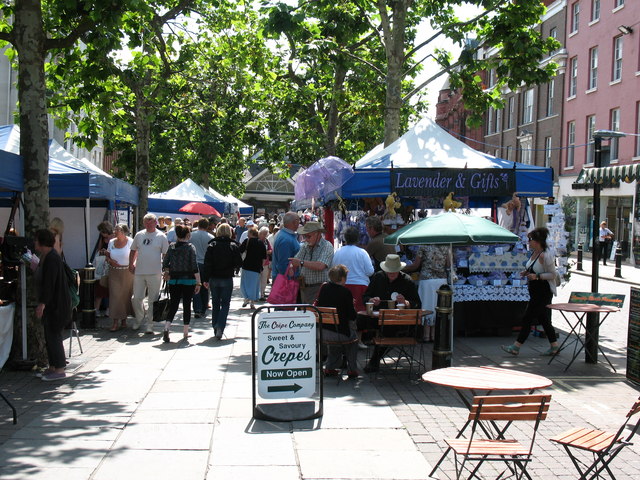
Craft_Fair,_Parliament_Street_-_geograph.org.uk_-_1400890
via Wikipedia Commons by Gordon Hatton  CC BY-SA 2.0


While reading about craft stories that became businesses, I found that most people eventually came to the point where they wanted a physical location. Some crafters turn to consignment while others start exhibiting at local craft fairs.

Craft fairs have a lot of benefits that include checking out the competition, exposure, networking and feedback.

Checking out the competition

Everyone and the world is at a craft fair, so it’s an outstanding opportunity to take a look at what’s going on.

Who’s selling what?

What are they selling it for?

What’s the actual quality of the items sold versus what’s really being posted online?

Craft fairs are a great source of information that you might not necessarily find elsewhere. A friend of mine was actively involved in the bazaar business for several years, and she made it a point to go around the fair a few times a day to see how things were going.

Exposure

Ken Samudio is a marine biologist turned accessories designer whose flower earrings are sold by Luisa Via Roma, Modus Operandi and Bergdorf Goodman.

But it all wouldn’t have happened without his attending the International Fashion Showcase in 2014.

While there, his work was spotted by Sara Maino who was Italia Vogue’s senior editor and lead talent scout. Their emails led to him being picked for a profile on the magazine’s 50th anniversary and eventually, this led to his being one of only twelve designers shown at the Milan Fashion Week.

Think about the odds of that.

And all from a craft fair.

In Manila, he appeared in the 2016 MaArte fair for the benefit of the National Museum and in Manila Fame. Both are big, well respected trade shows with big opportunities to draw in clients, get a lot of press and get to know a market.

Networking

Peachy is an online shop selling craft supplies and polymer clay products.

In 2015 she was featured by Chasing Dreams Design Co., who talked about meeting her through the craft fair Pursuit Manila. It was an interview on her business and crafting and what she values, and it has continued to provide exposure to her, long after the initial meeting.

In fact, it’s how I found her.

There’s so much information on the web (in 2013, there were 1 billion websites out there) that the mentions, shares, likes and interviews you have, the better your chances of success.

So, don’t forget it’s all about the people.

Feedback

Craft fairs instantly tell you if you’ve got the right product.

For instance, Lux 400 started by going to craft fairs and pop up stores and selling fashion accessories.

But if was only when she picked up crocheting as a side hobby and making cute crocheted food items called amigurami food that she found some success. She joined the BGC Art Mart exhibiting them, and customers responded well.

These days Lux 400 is started to get some press – who knows what will happen on her journey?

And who knows what will happen on yours?

A craft fair opens up opportunities and has a lot of value, so why not consider it? Admittedly there is a lot of preparation, but it can pay off in the end.

Have any good experiences with craft fairs? Let us know.

Turning craft into a business | Success stories from Manila

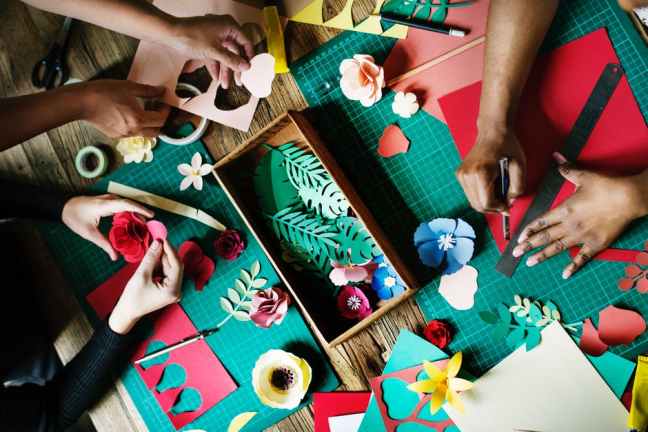
pexels-photo-395074
Via Pexels

Given the explosion of ecommerce, it’s only natural to think that a craft hobby might become a business.

In Manila, the arts and crafts scene has exploded.

There are tons more ecommerce sites and fairs than ever before, and serious crafters have begun to monetize them by building brands and blogs to reach an ever larger audience.

It seems like it isn’t easy, but there are a couple of great stories that I like to look at when I think about crafts business success in Manila.

1. Angel Anastasio

It’s interesting to see a business evolving, because while there are stories written after there’s been great success, it’s nice to see something that’s young and just starting.

Angel is a 26 year old entrepreneur who’s balancing several roles: MA Psychology, a day job, and her crafting business 400 Lux. She started by joining a crafts fair to sell accessories but picked up crocheting on the side. “Everything”, she says, “kind of snowballed from there.”

These days she makes anywhere from 8,000 on lean months to 19,000 on better months, but with the recent feature article on her in Cosmopolitan Philippines, that’s likely to increase.

2. Alchemista

Alchemista is a classic craft success story.

It is a jewelry line that started when the founder Georgina took silver smithing classes in Australia during her masters degree in 2003.

When she returned to the Philippines, she continued to work on it and make pieces for herself. Friends and coworkers started to notice, and she eventually put up the alchemista line to focus on her business full time.

She does wax carving and works with a team of metalsmiths to create her signature chunky bold pieces and continues to be active in the jewelry scene. She has been featured in several articles and has won the 2010 Philippine jewelers competition and placed highly in the 2013 GIA Thailand competition.

Hats off to her. Knowing what goes into creating jewelry and the difficulties of sourcing raw materials, it is such an accomplishment to see someone making it in this scene.

3. Common Room

Have you been here?

There are two shops now, one along Katipunan and another in Rockwell Makati that are filled with local crafter projects. There are cards and leather goods and small pieces of furniture. On some days, there are craft workshops in the space.

A venture by sisters Roma and Maan Agsalud, common room showcases items from the crafter community to introduce them to a wider audience. They had previous experience running a small craft kiosk in Alabang town center called PopJunkLove. They wanted a bigger location though and eventually found it in Katipunan.

The 10 years that Roma spent as the chief crafter of PopJunkLove prepared her for the challenge of launching the business. She understood the crafting community and instinctively filled a need that she saw.

It’s definitely inspiring. Who knows who might be the next big business success from a hobby?

🙂

What are your stories? Ever want to become an entrepreneur?


Why buy | Cold or Hot Process Soap 

white, bar, aroma, food, produce, natural
Via Pxhere

Buying cold or hot process soap in Manila has many benefits:

#1 It’s healthier and so much better for your skin

The ingredients in today’ soap bars are often bewildering. Liquid soaps will list parabens, preservatives, surfactants and fragrances. Triclosan is often included. Pretty much all have been shown to be bad for your skin or your health.

These chemicals are hormone disruptors and some are even known carcinogens at high doses, but often big companies get away with it because there really isn’t anyone policing or penalizing them – most enforcement is after the fact. They also often allege that low doses are safe.

But think about it – when animal studies show reproductive diseases at high doses from products that you use ever single day, maybe it is better to be safe than sorry.

Additionally, people who suffer from skin allergies have found that switching to a natural bar is so much better for thier skin. The itchiness goes away and skin allergies improve.

If your skin is sensitive, switching to natural soap bars may alleviate your symptoms.

#2 Its environmentally friendly.

Natural soaps are much more environmentally friendly than what we often buy off the shelf.

Grocery store soap is made in a factory, consuming tons of energy and ingredients that extend shelf life and make it easier to ship but that are a drain on natural resources. It doesn’t stop there. Transporting the product – often across international lines – is an energy and resource intensive endeavor.

When you buy natural soap, very little or no energy is needed. Cold process soap is formed entirely through a chemical reaction and hot process soap is formed with minimal heating. Additionally, transportation and packaging are much less.

#3 It supports the local economy

Several cold or hot process soap makers are small local businesses such as Milea Bee Farm or Ilog ni Manila. They cut and produce the soap in small batches using local labor, and the profits often go into supporting the local economy.

Its a virtuous cycle of return back into the places we care about and are close to our homes, and I just can’t see any downside in that.

#4 It is unique and beautiful

food green clean craft dessert lighting homemade freshness design soap beauty bath body hygiene toiletries
Via Pxhere

Cold process or hot process soap is beautiful and eye catching. Some of the local soap creators make eye catching bars that can’t be found anywhere else – think deep chocolate swirls and pumpkin pie bars.

When people wander into your bathroom, they’ll often be pleasantly surprised by a beautiful bar of soap that’s often a small testament to someone’s imagination.

And, no matter how tiny, why not be surrounded by beautiful things?